Seated Tai Chi for Seniors: 6 Gentle Chair Moves to Start
Seated tai chi is the gentlest way to start tai chi walking. The chair holds your weight, so your attention can go to how each move feels. A short routine of six moves, about 10 minutes a day, wakes up the feet, ankles, legs, and shoulders that every slow step depends on.
Why start in a chair?
Every walk starts long before the first step. It starts in the feet, the ankles, and the quiet muscles around the hips.
Sitting takes the fear of falling out of the room. That lets you notice small things: which foot lands harder, whether you hold your breath, how tall you sit. That attention is the heart of tai chi. You will carry it into every standing move later.
Set up your chair
- Use a sturdy chair without wheels, placed on a non-slip floor.
- Sit near the front of the seat with your feet flat and hip-width apart.
- Your knees should be at about a right angle.
- Keep a glass of water nearby, and wear comfortable clothes.
Safety first: Stop and rest if you feel sharp pain, dizziness, chest discomfort, or shortness of breath. Talk to your doctor before you begin if you have fallen in the past year or had a recent surgery or joint replacement. Mild effort is fine. Pain is a signal to stop.
The six moves
Do the moves in this order. Three are shown in full below. The other three are short and easy to learn.
1. Sit Tall
Sit near the front of the chair. Feel a soft lift at the crown of your head and grow a little taller. Nod the chin in slightly. Hold for five slow breaths, then relax. Do it 3 times. This move teaches your body where "tall" is.
2. Toe and Heel Lifts
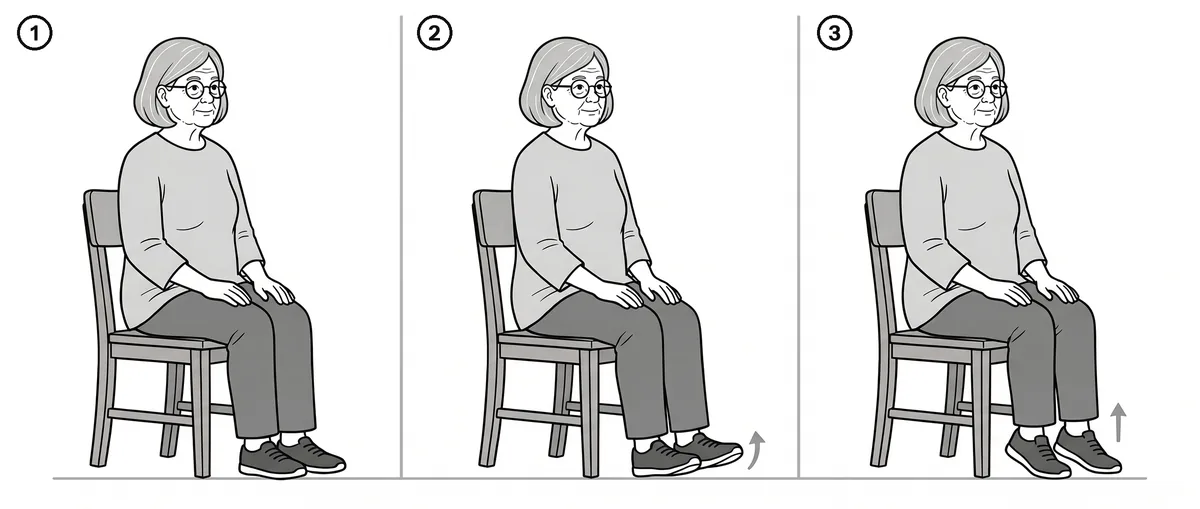
Your feet and ankles make tiny corrections every time you walk. This move wakes them up.
- Sit with both feet flat.
- Keep your heels down. Lift the front of both feet so your toes point up. Hold for two counts.
- Lower the toes. Now keep the balls of the feet down and lift both heels. Hold for two counts, then lower.
Breath: in as you lift, out as you lower. Repeat: 8 to 10 times. Easier: one foot at a time.
3. Ankle Circles
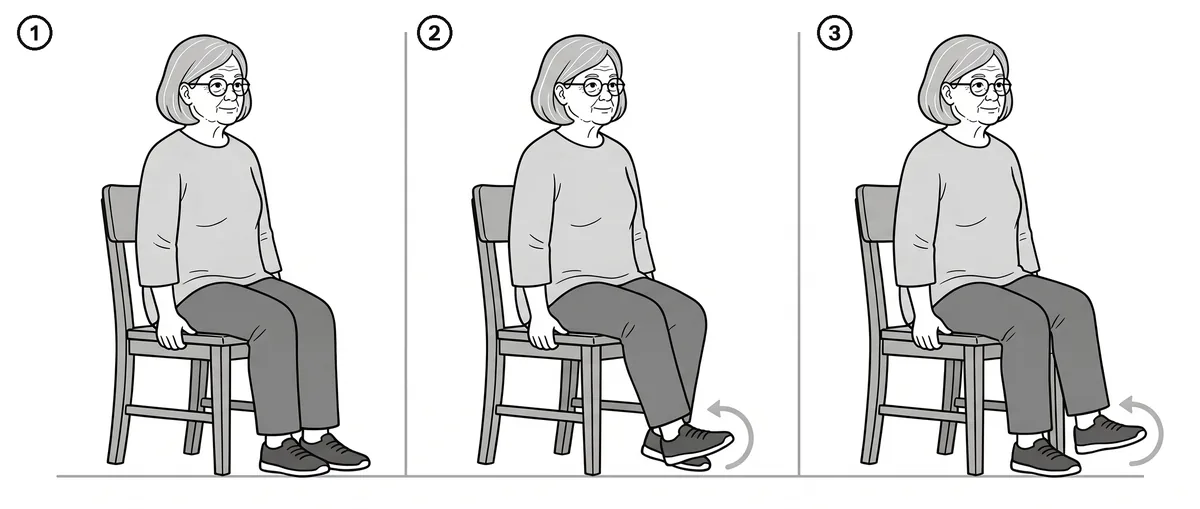
Stiff ankles make for short, shuffling steps.
- Sit tall. Hold the side of the seat with one hand if you like.
- Slide your right foot forward a little and lift it just off the floor.
- Draw five slow circles with your toes, as if stirring a pot. Then five the other way.
- Lower the foot and repeat with the left foot.
Breath: slow and even. Do not hold your breath.
4. Seated March
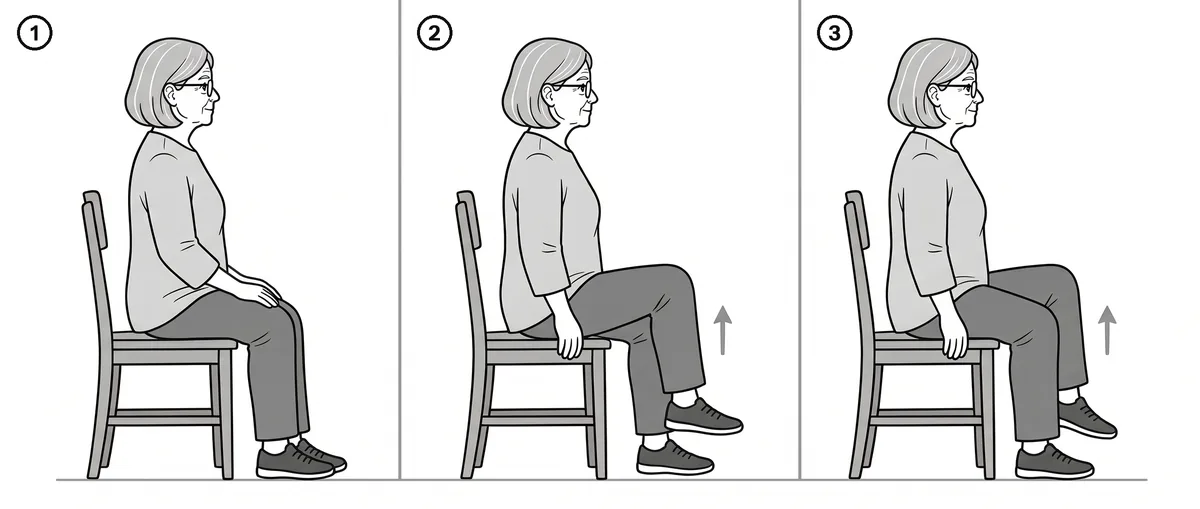
Walking is a series of lifts and soft landings. This move practices both, with the chair holding all your weight.
- Sit tall with your hands on your thighs or holding the sides of the seat.
- Slowly lift your right knee a few inches. Place the foot down softly, heel first.
- Lift your left knee the same way, and place it down softly.
Breath: in as the knee rises, out as the foot lands. Repeat: 10 lifts on each side. Easier: lift only the heel.
Watch for: keep your back tall. A small lift done well is better than a high lift done fast.
5. Leg Reach
Hold the sides of the seat. Slowly straighten one leg in front of you until it is nearly straight, toes gently up. Hold for three counts, then lower. Switch legs. Keep the knee soft and never snap it straight. If you have had knee or hip surgery, ask your doctor whether this move suits you.
6. Rising Arms
Let your arms hang by your sides. Breathing in, let both arms float forward and up to shoulder height, slowly, as if rising through warm water. Breathing out, let them float down. Do it 6 times. Keep the shoulders soft and away from the ears.
Your 10-minute chair routine
| Move | How many | About how long |
|---|---|---|
| Sit Tall | 3 holds of 5 breaths | 1½ minutes |
| Toe and Heel Lifts | 8 to 10 | 1½ minutes |
| Ankle Circles | 5 each way, each foot | 2 minutes |
| Seated March | 10 each side | 2 minutes |
| Leg Reach | 6 each leg | 2 minutes |
| Rising Arms | 6 | 1 minute |
Do the routine once a day for about a week. Rest a day whenever you need to.
Chair tai chi or chair yoga?
Both are done in a chair and both are gentle. Chair yoga usually holds poses and stretches. Chair tai chi keeps moving slowly and links each move with the breath. Its moves are also the first steps toward tai chi walking. You can enjoy both.
What comes after the chair?
When the chair routine feels easy, stand up behind the chair with both hands on its back. Practice slow weight shifts, side to side and forward and back. Then learn the basic tai chi step at the kitchen counter.
The free starter routine gives you five of these beginner moves with drawings, and a 28-day plan. The book Tai Chi Walking for Seniors takes you from this chair week all the way to slow, steady walking.
Questions people ask
What is chair tai chi?
Chair tai chi is tai chi done sitting down, or with a chair for support. It keeps the slow, flowing style and calm breathing of tai chi while the chair holds your weight.
Is chair tai chi a real workout?
It is gentle. It wakes up the feet, ankles, legs, and shoulders and links movement with breath. It is a good first step, not a hard workout.
What kind of chair should I use?
A sturdy chair without wheels or arms that tip, with your feet flat on the floor and your knees at about a right angle.
How soon can I start standing moves?
Many beginners do one week of seated moves first. When the chair routine feels easy, add standing weight shifts with both hands on a chair back.