Tai Chi Books for Seniors: 7 Questions to Ask First
Good tai chi books for seniors start in a chair, show every move with a clear drawing, and give you a short plan for each day. They also tell you when to stop and when to repeat a week. If a book skips those parts, a beginner over 60 may find it hard to follow at home.
What should tai chi books for seniors include?
Look for drawings, numbered steps, a daily plan, and a safety note on every standing move. Photos of a young expert in a deep stance look lovely. They're much harder to copy.
A useful move page follows the same order each time. In Tai Chi Walking for Seniors, every move opens with a short reason. Then come numbered steps tied to the numbers on the drawing, a breathing cue, a repeat count, an easier and a harder version, and a "watch for" safety line. Because the order never changes, you always know where to look when you glance down from the counter.
Large type and plenty of white space matter too. You'll read a line, look up, and try it. Dense text makes that slow.
Can you learn tai chi from a book without a class?
Yes, for simple beginner moves, many people do. Slow tai chi walking uses a small set of moves: weight shifts, a slow heel-first step, and gentle arm patterns. A clear drawing and a short list of steps can carry most of that.
A class adds a teacher's eye. If one meets near you, it can sit well beside a book. Still, a book has two advantages at home. You set the pace, and you can reread a step as often as you like. Halfway through a move, you can stop, read step 3 again, and carry on.
Is a book better than a tai chi video?
Neither is better for everyone. A video shows the flow of a move. A book lets you stay on one position for as long as you need, with no button to hunt for.
Many older beginners use both. They learn the shape of a move from the drawing, then watch a short clip to see the rhythm. If screens tire your eyes, a book with big drawings is often the calmer choice. Our comparison of tai chi walking vs. tai chi explains which style suits someone learning at home.
Should a beginner tai chi book start in a chair?
It should, if you're new to exercise or haven't moved much lately. Seated moves let your feet, ankles and breathing warm up with no worry about wobbling.
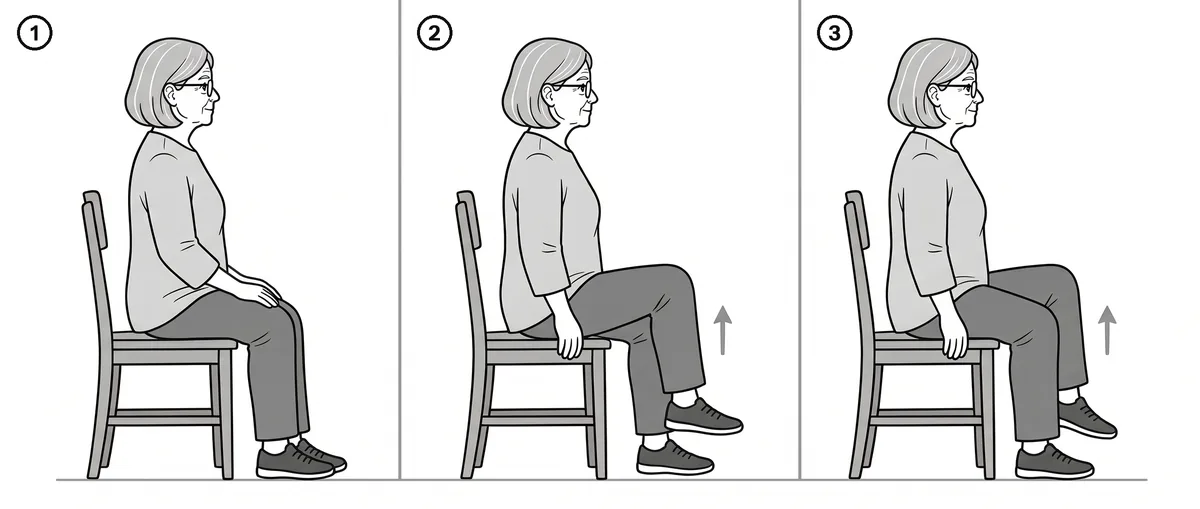
Tai Chi Walking for Seniors keeps you in the chair for the whole first week. Before you stand, it asks three simple questions:
- Can you sit upright for a full minute without leaning on the chair back?
- Can you march in the chair, ten lifts per leg, while breathing easily?
- Can you stand up and lower yourself back to the seat with control?
If any answer is no, you stay in the chair for another week. That's a sensible gate, and it keeps the standing work from arriving too early. The six seated moves give you a free taste of this stage.
How do you practice with the book open?
Set the book where you can read it while standing. The kitchen counter works well, with the book propped against the backsplash. Read the whole move first. Then do it once, slowly, with one hand resting on the counter.
Say the book lies open beside the sink. You read steps 1 and 2, rest your left hand on the counter, and try them. Before step 3, you glance back down. Never read while one foot is in the air. Stop, settle your weight on both feet, then look.
Keep a pencil nearby. Tai Chi Walking for Seniors has a tracker at the back. Tick each day you practice, and jot down anything you noticed, like a steadier turn by the stove.
How long does a tai chi book program take?
Most beginner plans run a few weeks, with short sessions. The plan in Tai Chi Walking for Seniors lasts 28 days in four stages:
- Week 1: seated moves only.
- Week 2: on your feet, holding a chair back or the counter with both hands.
- Week 3: slow walking patterns beside a counter or wall.
- Week 4: gentle arm moves added to the steps.
A typical session lasts 10 to 15 minutes.
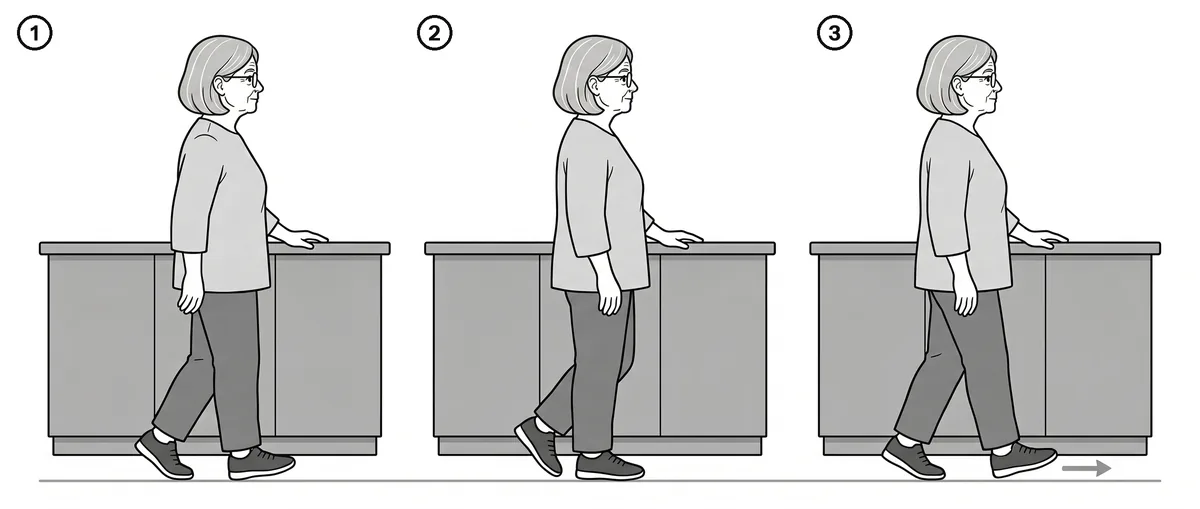
Two days in that plan, Day 7 and Day 21, let you choose: repeat a routine you liked, or rest. You can also repeat any week. A plan that allows this fits real life better than one that pushes you forward on a fixed date.
Which tai chi book should a beginner over 60 start with?
Start with a book that matches where you are today. If you're already steady on your feet and want a calmer way to walk, a walking-based plan fits. If sitting feels safer right now, choose one that begins in a chair and builds slowly.
Tai Chi Walking for Seniors was written for that second reader. It moves from the chair to the counter to a slow hallway walk, one week at a time, with a drawing for every move. To try the basic step before you buy anything, read the step-by-step beginner guide.
Whichever book you pick, check with your doctor before you start a new exercise plan. This matters most if you've fallen in the past year or take blood pressure medicine.
If you'd like to start small, print the free starter routine, tape it to the fridge, and try the first chair move tomorrow morning.
Questions people ask
Is it safe to learn tai chi from a book at home?
Many people practice from a book at home. Pick one that starts seated, keeps a chair or counter in reach for every standing move, and lists clear stop signs. Check with your doctor before you begin.
Do I need any equipment to follow a tai chi book?
Usually not. A sturdy chair without wheels, a kitchen counter, flat shoes with grip and a clear path of a few feet are enough for most beginner books.
What if I can't keep up with the book's schedule?
Repeat the week. A good beginner plan expects this and lets you move on only when the earlier moves feel easy. Slow progress still counts.