Tai Chi Walking vs. Tai Chi: Which Should You Learn?
Tai chi walking vs. tai chi comes down to size. A full tai chi practice has many flowing moves done in a set order. The walk takes one part of it, the slow and careful step, and practices that part on its own. Many people over 60 start with the walk and add more tai chi later, if they want it.
What is the main difference between tai chi and tai chi walking?
The main difference is how much you learn at once. A full tai chi session moves through a long sequence of arm and leg moves, one flowing into the next. That sequence is called a form, and learning it can take months.
Tai chi walking has no long form. You practice one thing: placing the foot with no weight on it, rolling it flat, and then moving your weight onto it. You repeat that step slowly, often beside a kitchen counter. The plain guide to tai chi walking explains the step in more detail.
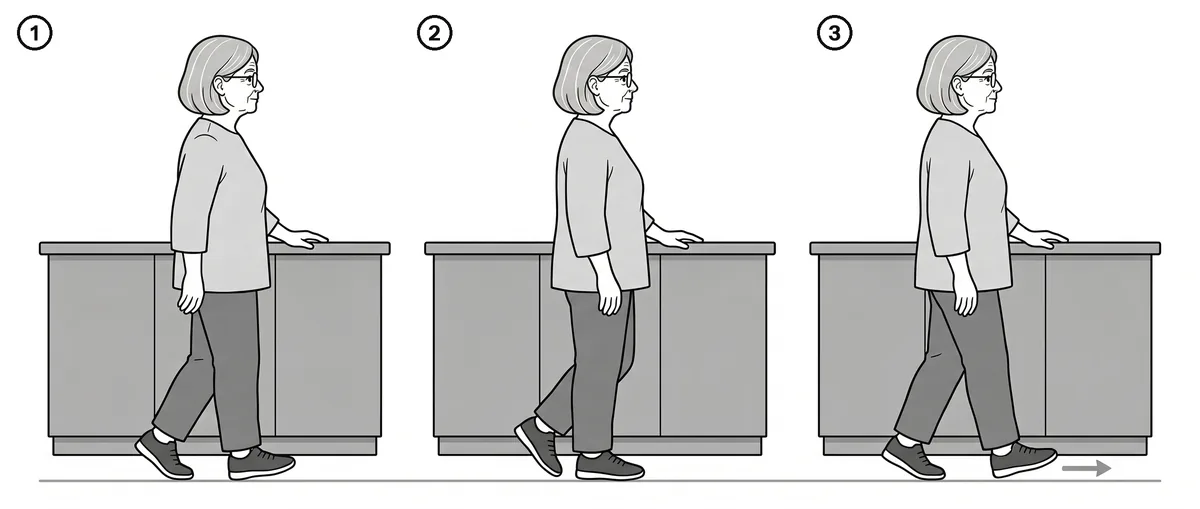
Tai chi walking vs. tai chi at a glance
The table below shows the two side by side. Neither one is better. They ask different things of you.
| Tai chi walking | Full tai chi | |
|---|---|---|
| What you learn | One slow step and a few directions | A long sequence of moves (a form) |
| Memory needed | Very little | A lot: the order of every move |
| Arms | Mostly still, or resting on a counter | Moving all the time, with the legs |
| Where | At home, beside a counter or wall | A class, a park, or a larger room at home |
| Support | A hand on a counter at first | Usually none, standing free |
| Time to feel at ease | Days to a few weeks | Many weeks to months |
| Typical session | 10 to 15 minutes | 20 minutes to an hour |
Is tai chi walking real tai chi?
Yes, in the sense that it uses the real tai chi step. Every tai chi move rests on the same idea: the foot arrives first, and the weight follows later, on purpose. Tai chi walking keeps that idea and drops the rest.
So tai chi walking is not a full tai chi practice. It is one piece of tai chi, taken out and practiced slowly. The name "tai chi walking" has become popular online, often in ads. The practice itself is simple and old. We look at what research has and has not found in Does Tai Chi Walking Really Work?
Why do many beginners start with the walk?
Many beginners start with the walk because there is less to think about. In a full form, you watch the teacher, remember the next move, move your arms, and shift your weight, all at once. That can feel like too much, especially in the first weeks.
With tai chi walking, your attention stays on one thing: your feet and your weight. Many people find this calmer. It also gives quick, clear progress. You can feel the step get smoother over a week or two.
Other reasons people choose the walk first:
- Practice happens at home, with no class and no travel.
- Exercise videos often move too fast to follow.
- One hand can stay on the counter while the step is new.
- Ten or fifteen minutes a day fits more easily than a long session.
What does full tai chi add?
Full tai chi adds flowing arm moves, turns, and longer sequences. Moves such as Cloud Hands and Brush Knee join the arms and the legs into one slow motion. The form also asks you to turn the body and step in many directions while you stay calm and upright.
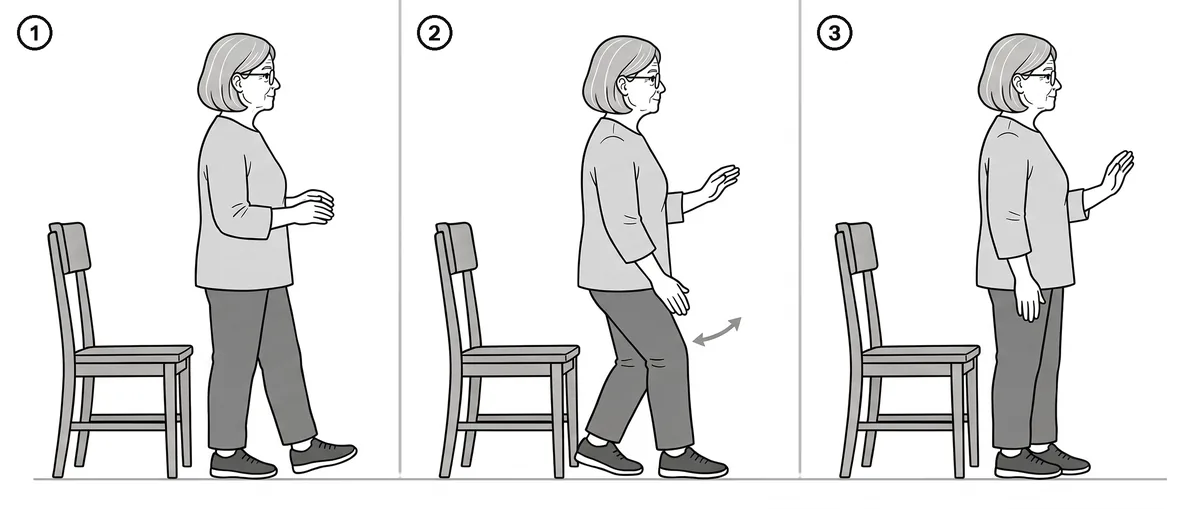
For many people, this is the most enjoyable part. A class can also bring company, music, and a regular reason to leave the house. If you like learning from a teacher, and you feel steady standing without support, a beginner class may suit you well.
Which one should you choose?
Choose by how you feel on your feet today and how you like to learn.
- You feel less steady than you used to. Start with tai chi walking at home, with a hand on the counter. Talk to your doctor first.
- You have not exercised in a long time. Start seated. A week of gentle chair moves builds the base for the walk.
- You feel steady and you like classes. A beginner tai chi class may suit you. The walk can still be your daily practice at home.
- You find long sequences hard to remember. Tai chi walking is a good fit. There is nothing to memorize.
You do not have to choose forever. The two fit together. The slow step you learn in tai chi walking is the same step you use in every tai chi move.
How do you go from tai chi walking to full tai chi?
You go one small stage at a time. A gentle path that many programs follow looks like this:
- Seated moves for the first week.
- Standing weight shifts at a chair or counter.
- The slow tai chi step along the counter.
- Walks in other directions: backward, sideways, and in a figure eight.
- Simple arm moves, such as Cloud Hands, added to the walk.
Each stage builds the base for the next. Move on only when the stage you are on feels easy and steady.
Safety for both
Talk to your doctor before you start either one. This matters most if you have fallen in the past year, often feel dizzy, or use a cane or a walker.
- Wear flat shoes with a good grip, or practice barefoot on a non-slip floor.
- Keep a sturdy chair without wheels nearby.
- Keep a hand on a counter until the step feels steady.
- Stop and rest if you feel pain, dizziness, chest discomfort, or shortness of breath.
How to begin this week
Start small. Clear a short path beside your kitchen counter. Spend a few days on chair moves, then try a few slow steps with one hand on the counter.
The free starter routine gives you five beginner moves with large drawings and a 28-day plan. The book Tai Chi Walking for Seniors goes further: it takes you from chair moves to the slow walk, and then to gentle tai chi arm moves, one week at a time.
Questions people ask
Is tai chi walking real tai chi?
It uses the real tai chi step: place the foot first, then shift the weight. It does not include the long flowing sequence of moves that a full tai chi class teaches.
Which is easier to learn, tai chi or tai chi walking?
Tai chi walking is easier to start. There is one step to learn and no sequence to remember. Full tai chi asks you to memorize many moves in a set order.
Can I move on to full tai chi later?
Yes. The slow step, the soft knees, and the weight shift are the base of every tai chi move. Many people find a class easier once the step feels natural.
Do I need a class for either one?
Tai chi walking is simple enough to learn at home with drawings or a short plan. A full tai chi form is easier to learn with a teacher who can show you each move.