Tai Chi Walking vs. Regular Walking: What's the Difference?
Regular walking and tai chi walking train different things. A brisk regular walk mainly works the heart and lungs and gets you out of the house. Tai chi walking is much slower and mainly practices balance and control: placing the foot, shifting the weight, and pausing in between. They work well together.
The difference at a glance
| Regular walking | Tai chi walking | |
|---|---|---|
| Pace | Natural to brisk | Very slow, one part at a time |
| How the step works | You fall slightly forward; the front foot catches you | Foot first, then the weight, on purpose |
| Main focus | Getting somewhere, steady effort | Balance, weight shift, posture, breath |
| Where | Outdoors, a mall, a track | Indoors, beside a counter or wall |
| Support | Usually none | One hand on a counter at first |
| Typical session | 10 to 30 minutes or more | 10 to 15 minutes |
| What it mainly trains | Heart, lungs, stamina | Balance, control, leg strength in slow positions |
How each step is different
In a regular step, you lean a little forward and the front foot lands just in time to catch you. It is fast and automatic. That is why walking feels easy when all is well, and why a surprise, like an uneven curb, can throw you off.
In a tai chi step, you never fall into the step:
- You place the heel forward with no weight on it.
- You roll the foot flat.
- You shift your weight onto it, and only then does the back foot follow.
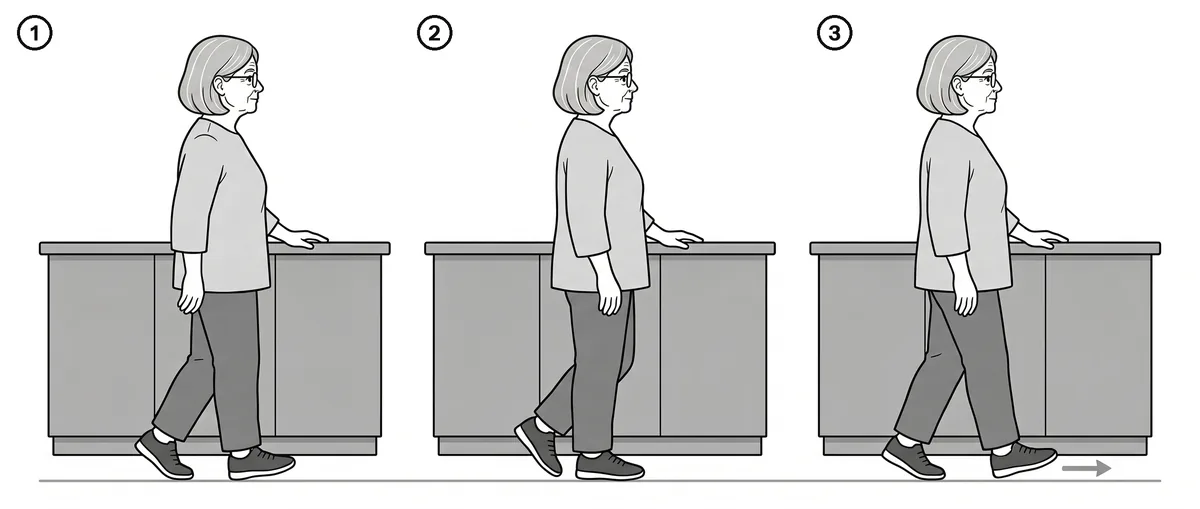
At every point in a tai chi step, you could stop and stand still. That is the whole idea. The basic step guide shows each part with drawings.
What each one is good for
Regular walking is one of the easiest ways to stay active. Health agencies such as the World Health Organization advise adults, including older adults, to get regular moderate aerobic activity across the week. Brisk walking is a common way to do that. It also brings fresh air, daylight, and a reason to see people.
Tai chi walking focuses on the parts of walking that matter for steadiness. The same WHO guidance advises older adults to add activities that work on balance and strength on three or more days a week. Slow weight shifts and controlled steps are a gentle way to practice that at home. Research on tai chi with older adults is encouraging; we summarize it in Does Tai Chi Walking Really Work?
What about weight loss?
Ads often sell "tai chi walking" as a weight-loss method. Be careful with that claim. Tai chi walking is slow and low effort. It is not designed to raise your heart rate like a brisk walk. If weight is your main goal, talk to your doctor about a plan that fits you. Tai chi walking can still be a calm daily habit alongside it.
Which one should you start with?
Your starting point depends on how you feel on your feet today.
- You walk outdoors with ease, but feel wobbly when you turn or reach. Keep your regular walks. Add 10 minutes of tai chi walking at home on most days to practice the weight shift.
- You feel unsure on uneven ground or in crowds. Talk to your doctor first. Then start tai chi walking beside a counter, and keep outdoor walks short, on even paths, at a comfortable pace.
- You rarely walk at all right now. Start seated. A week of gentle chair moves builds the base. Add short indoor walks next, and the tai chi step after that.
- You use a cane or a walker. Ask your doctor which moves suit you. Many of the seated moves can still fit into your day.
There is no single right answer. The best plan is the one you can keep doing safely, most days, for months.
A simple week that uses both
Here is one example of how the two can fit together. Adjust it to your own health and your doctor's advice.
| Day | Tai chi walking at home | Regular walk |
|---|---|---|
| Monday | 10 minutes | 15 minutes |
| Tuesday | 10 minutes | Rest |
| Wednesday | 10 minutes | 15 minutes |
| Thursday | 10 minutes | Rest |
| Friday | 10 minutes | 20 minutes |
| Saturday | 5 minutes, easy | A walk with a friend |
| Sunday | Rest | Rest or a short stroll |
Start with whatever feels easy, and build up slowly over a few weeks.
Safety for both
- Talk to your doctor before you start, especially if you have fallen in the past year or feel dizzy.
- Wear flat shoes with a good grip.
- For tai chi walking, keep a hand on a counter until the step feels steady.
- For regular walks, pick even paths in good light, and take a phone with you.
- Stop if you feel pain, dizziness, chest discomfort, or shortness of breath.
How to begin
If you are new to tai chi walking, start seated for a few days with gentle chair moves. Then learn the basic step at the counter. Keep your regular walks as they are, and add the slow practice on top.
Questions people ask
Is tai chi walking better than regular walking?
Neither is better overall. They train different things. Regular brisk walking mainly works your heart and lungs. Tai chi walking mainly practices balance, control, and the weight shift in each step. Many people benefit from both.
Can tai chi walking count as my daily walk?
It is too slow to replace aerobic activity. Think of it as balance practice that you add to your week, not a swap for a brisk walk.
Can I do both on the same day?
Yes. Some people do 10 minutes of tai chi walking at home, then go for a regular walk later in the day.
Which should I start with if I feel unsteady?
Talk to your doctor first. Many people start with seated moves and tai chi weight shifts at home, holding a counter, and build up from there.