What Is Tai Chi Walking? A Plain Guide for Seniors
Tai chi walking is a slow, careful way of walking that comes from tai chi. You place one foot forward with no weight on it, roll it flat, and only then move your weight onto it. It turns one quick, everyday step into small parts that you can feel, pause, and control.
Where does tai chi walking come from?
Tai chi is a gentle form of movement that began in China centuries ago. It started as a martial art. Today most people practice it for calm, posture, and ease of movement.
A tai chi session looks like slow dancing on your own. One move flows into the next. The weight shifts from foot to foot with care. The breath stays slow.
Tai chi walking takes one idea from that practice and puts it at the center: the slow, careful step. You do not need to learn a long tai chi form to do it.
How is a tai chi step different from a normal step?
In everyday walking, we fall forward a little with each step. The front foot catches us just in time. It happens so fast that we never notice it.
In tai chi walking, you never fall into the step. The foot arrives first. The weight follows later, on purpose.
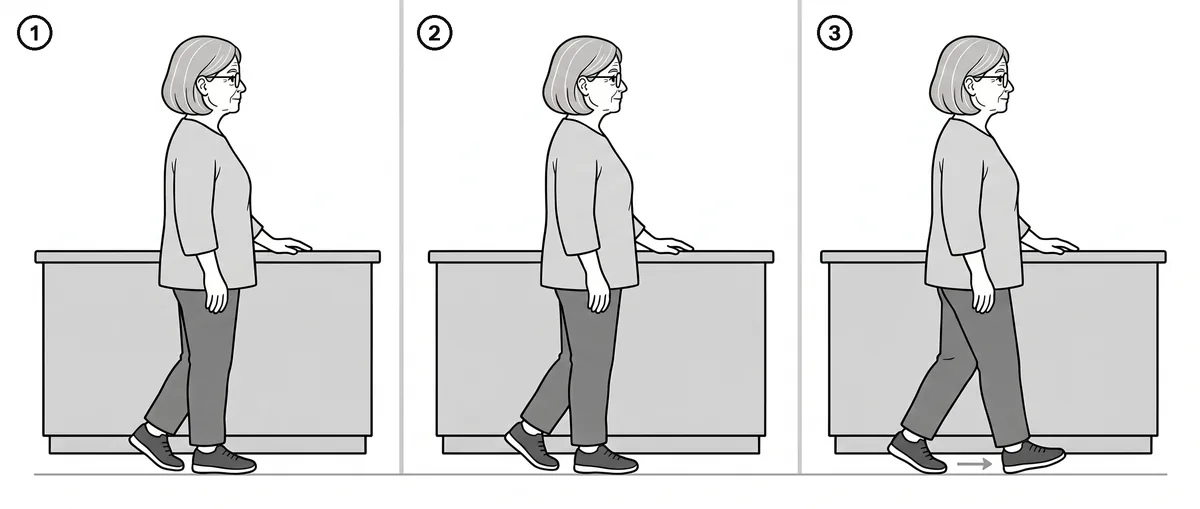
Here is the difference in plain terms:
| Everyday step | Tai chi step | |
|---|---|---|
| Speed | Quick, automatic | Slow, on purpose |
| When the weight moves | As the foot lands | After the foot is flat and steady |
| Can you stop halfway? | Hard to | Yes, at any moment |
| Where your attention is | Somewhere else | On the feet and the breath |
Because every part is slow, you have time to notice things. One foot may land harder than the other. You may lean forward when you feel unsure. Noticing is where change starts.
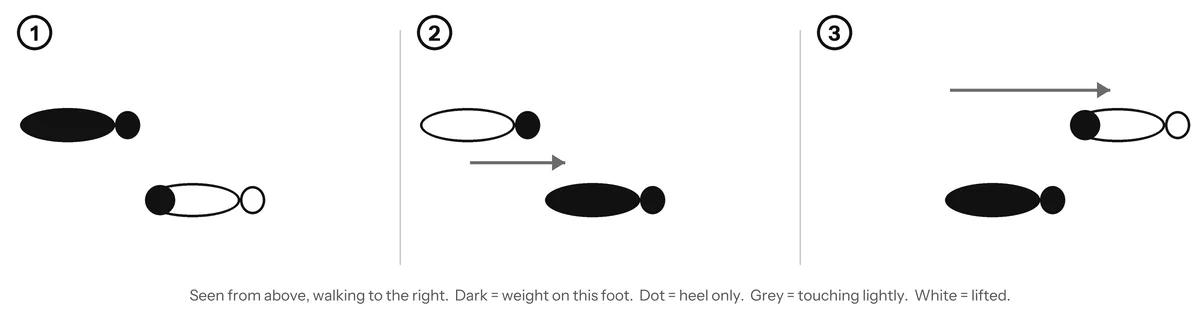
Why does the weight shift matter?
Every step is really a weight shift. You move your weight from one foot to the other, again and again, all day long.
Think of the moments when you feel least sure on your feet. Turning around in the kitchen. Stepping off a curb. Reaching for a high shelf. Each one asks your body to move its weight in a new direction.
Tai chi walking practices that shift slowly and safely, with a hand on a counter. You learn to feel when your weight has fully arrived on one foot. You learn to pause there before you move on.
What does a tai chi walking session look like?
A beginner session is short and calm. A typical 10-minute routine might look like this:
- One minute of slow breathing, seated or standing tall.
- A few warm-up moves in a chair, such as toe and heel lifts. See 6 gentle seated moves.
- Weight shifts at the chair, side to side and forward and back.
- A few slow tai chi steps along the counter, there and back. The basic step guide shows how.
- A quiet finish: stand tall, breathe out, and let the arms hang.
Many programs start fully seated for the first week, then add standing moves with support, and only then add walking. That order matters. Each stage builds the base for the next.
Who is tai chi walking for?
It suits many adults over 60, including people who:
- feel less steady on their feet than they used to,
- find exercise videos too fast to follow,
- want a short routine at home with no equipment,
- prefer something calm rather than a hard workout.
You do not need to be fit, flexible, or young. Many people start tai chi in their seventies or eighties.
Who should check with a doctor first?
Talk to your doctor before you start if any of these apply to you:
- you have fallen in the past year,
- you often feel dizzy or lightheaded,
- you have heart or blood pressure problems, or take medicine for them,
- you had a recent surgery or a joint replacement,
- you use a cane or a walker.
Stop and rest if you feel sharp pain, dizziness, chest discomfort, or shortness of breath. Mild effort is fine. Pain is a signal to stop.
Is tai chi walking a real thing or a trend?
The name "tai chi walking" has become popular online, often in ads for apps and paid plans. The practice behind it is old and simple: slow, careful stepping from tai chi. Researchers have studied tai chi with older adults for decades. We look at what they found, and what they did not find, in Does Tai Chi Walking Really Work?
You do not need an app or a subscription to practice it. You need a few minutes, a clear space, and patience.
How to start this week
- Clear a short path beside your kitchen counter, about four steps long.
- Put a sturdy chair without wheels nearby.
- Start seated. Spend a few days on chair moves before you stand.
- Keep each session short: 10 to 15 minutes.
- Write down how each day felt. Small notes help you see progress.
If you want a simple plan to follow, the free starter routine has five beginner moves with large drawings and a 28-day plan.
Questions people ask
What is tai chi walking in simple words?
It is walking very slowly in the tai chi way. You place your foot first with no weight on it, then move your weight onto it, and only then bring the back foot forward.
Is tai chi walking the same as tai chi?
No. Tai chi is a full practice with many flowing moves. Tai chi walking takes one part of it, the slow step, and practices that on its own.
Can I do tai chi walking at home?
Yes. A kitchen counter or a wall to touch, a sturdy chair, and a clear, non-slip floor are enough. Many people start seated for the first week.
How long does a session take?
Most beginners practice about 10 to 15 minutes a day. Short, regular practice is easier to keep up than long sessions.