Starting Tai Chi Walking After 70: A Safe First Week
After 70, the safest way to start tai chi walking is to begin seated, for a full week, after a word with your doctor. Set up a clear, well-lit space with a sturdy chair, check in with your body before each session, and keep each practice to about 10 minutes. Standing and walking come later, one week at a time.
Step 1: Talk to your doctor
Bring this list to your appointment. Ask your doctor whether tai chi walking suits you if any of these are true:
- You have fallen in the past year.
- You had a recent surgery or a joint replacement.
- You take medicine for your heart or blood pressure.
- You have a condition that affects your balance, heart, or breathing.
- You use a cane or a walker.
Your doctor knows your body. A website does not. The CDC's STEADI program also encourages older adults to talk with their doctor about falls and about staying active.
Step 2: Set up a safe space
You only do this once.
- Clear a path of about 6 to 8 feet beside a kitchen counter or a wall.
- Move loose rugs, cords, shoes, and pet toys out of the way.
- Light the room well, so you can see your feet.
- Choose a sturdy chair without wheels or a swivel. Push it against a wall.
- Keep a phone and a glass of water within reach.
- Wear flat, closed shoes with grip. No socks alone on a smooth floor.
Step 3: A 2-minute check before every session
Sit in your chair and ask yourself:
- Did I sleep reasonably well?
- Do I feel steady when I stand up from the chair?
- Is my head clear, with no dizziness?
- Is any joint more painful or swollen than usual?
- Have I eaten something in the last few hours?
- Have I taken a new medicine today?
- Is my path clear and my support within reach?
If you answer "no" to any of the first three, keep today seated, or rest. If a joint is more painful than usual, rest today and call your doctor if it lasts.
Step 4: Your seated first week
Week 1 stays fully in the chair. That is on purpose. The chair takes the fear of falling out of the room, so you can pay attention to how each move feels.
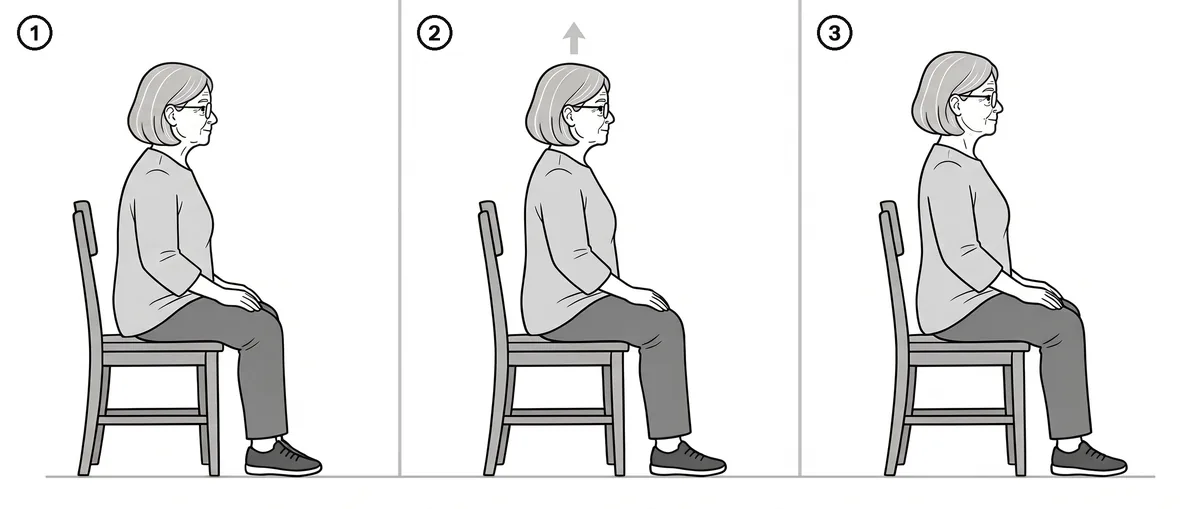
| Day | What to do | About how long |
|---|---|---|
| 1 | Slow breathing, Sit Tall, Toe and Heel Lifts | 5 minutes |
| 2 | Day 1 plus Ankle Circles | 7 minutes |
| 3 | Day 2 plus Seated March | 8 minutes |
| 4 | Rest, or repeat Day 3 gently | 0 to 8 minutes |
| 5 | Day 3 plus Leg Reach | 9 minutes |
| 6 | All of the above plus Rising Arms | 10 minutes |
| 7 | The full routine, slowly | 10 minutes |
Each move is explained with drawings in six gentle seated tai chi moves.
Step 5: Know the stop signs
Stop at once and stay seated if you feel:
- sharp pain anywhere,
- dizziness or light-headedness,
- chest pain, pressure, or discomfort,
- shortness of breath that does not settle quickly.
Rest until it passes. If it does not pass, call your doctor. If it is severe, call for emergency help.
Mild effort and a little tiredness in the muscles are normal. Pain is not.
After week 1: what comes next
When the seated routine feels easy, stand behind the chair with both hands on its back. Practice slow weight shifts and heel raises. Give that a full week too.
Only then learn the basic tai chi step along the kitchen counter.
Many people take five or six weeks instead of four. That is fine. If a week feels hard, repeat it.
Tips that help after 70
- Practice at the same time each day, often mid-morning after breakfast, when joints have loosened.
- Avoid practice right after a large meal, late in the evening, or soon after medicine that makes you sleepy.
- If you live alone, tell a friend or relative when you practice. Wear your medical alert button if you have one.
- Use the easier version of any move whenever you like. There is no prize for the harder one.
- Write one line a day. How you slept, how your legs felt, anything you noticed.
What to expect
You may notice that you feel calmer, sit taller, or pay more attention to your steps. You may notice nothing special for a while. Both are normal. Research on tai chi with older adults is encouraging, but it describes groups of people, not you in particular. We summarize it in Does Tai Chi Walking Really Work?
The free starter routine gives you five beginner moves with drawings and a 28-day plan.
Questions people ask
Am I too old to start tai chi walking?
No. Many people start tai chi in their seventies or eighties. Starting seated and going slowly matters more than age.
Should I see my doctor first?
Yes, especially if you have fallen in the past year, had a recent surgery or joint replacement, take heart or blood pressure medicine, or have a condition that affects your balance.
What if I use a cane or walker?
Ask your doctor which moves suit you. Many seated moves can still fit your day. Do not set your walking aid aside to practice without your doctor's advice.
How do I know I'm ready to stand?
When the seated routine feels easy for several days in a row, and you feel steady standing up from the chair, try standing moves behind the chair with both hands on its back.