Tai Chi Walking vs. Chair Yoga: Which Suits You?
Chair yoga and tai chi walking are both gentle, but they practice different things. Chair yoga is mostly seated: you hold poses, stretch, and breathe. Tai chi walking is mostly standing with support: you move slowly and shift your weight from foot to foot. If your main goal is feeling steadier on your feet, tai chi walking practices that more directly. Many people enjoy both.
At a glance
| Chair yoga | Tai chi walking | |
|---|---|---|
| Position | Mostly seated | Starts seated, then standing with a hand on a counter |
| Style | Held poses and stretches | Slow, continuous movement |
| Main focus | Flexibility, posture, breath | Weight shift, balance, control of each step |
| Breath | Linked to each pose | Linked to each move |
| Space needed | A chair | A chair plus a short clear path beside a counter |
| Typical session | 10 to 30 minutes | 10 to 15 minutes |
What chair yoga is
Chair yoga adapts yoga poses so you can do them sitting in a chair, or standing while holding it. A session often includes gentle twists, side bends, shoulder rolls, and seated forward folds, each held for a few breaths.
It suits people who:
- want to loosen stiff joints and muscles,
- prefer to stay seated most of the time,
- enjoy stretching and quiet, held poses.
What tai chi walking is
Tai chi walking comes from tai chi. It turns a step into slow, separate parts: place the heel with no weight on it, roll the foot flat, then shift your weight onto it. The plain guide to tai chi walking explains it in more detail.
Beginners usually start in a chair for a week, then stand behind the chair for weight shifts, and only then walk slowly along a kitchen counter.
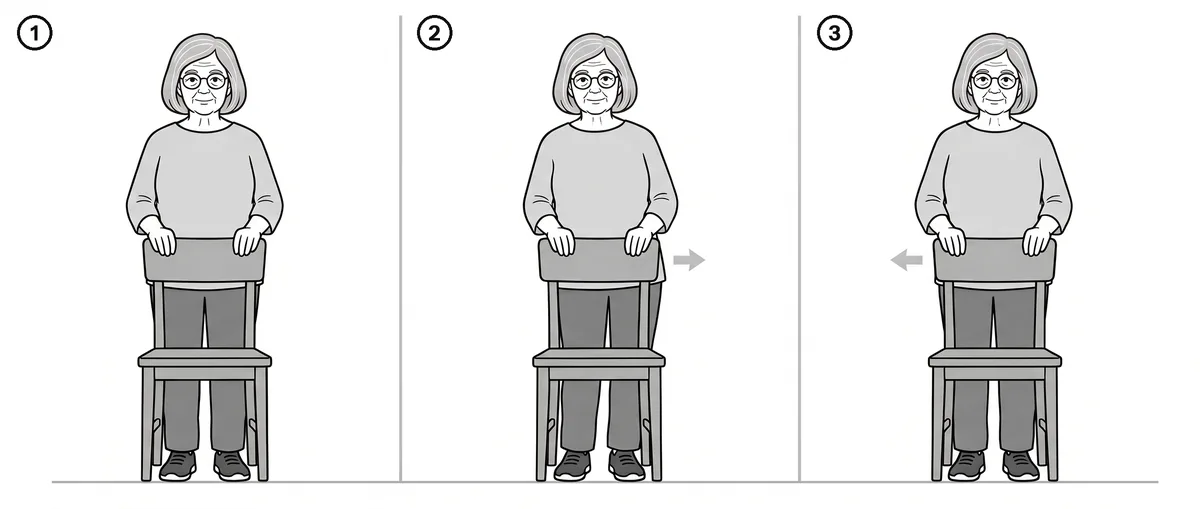
It suits people who:
- feel less steady when they walk, turn, or reach,
- like moving rather than holding still,
- want to practice the exact motion of walking in a safe way.
What about chair tai chi?
Chair tai chi sits between the two. It uses tai chi's slow, flowing moves while seated. Many tai chi walking programs begin with it. A good first chair tai chi move is Rising Arms: let the arms float up to shoulder height as you breathe in, then float down as you breathe out.
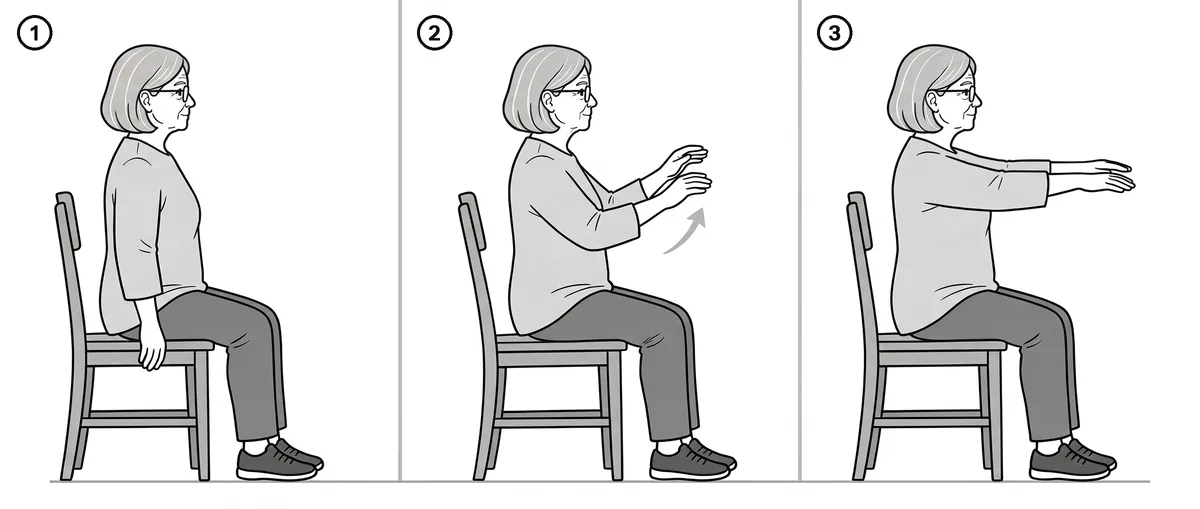
See six gentle seated tai chi moves for a full chair routine.
Which one should you choose?
Ask yourself one question: what bothers you most today?
- "I feel stiff." Chair yoga is a natural fit. Its stretches target stiffness.
- "I feel unsure on my feet." Tai chi walking practices the weight shift in every step. Start seated, then add standing moves with support.
- "I get bored holding poses." Tai chi walking keeps moving.
- "I can't stand for long." Chair yoga, or the seated week of a tai chi walking program.
- "I want both." Do both. They do not compete.
A gentle week that uses both
| Day | Practice | About how long |
|---|---|---|
| Monday | Tai chi walking | 10 minutes |
| Tuesday | Chair yoga | 15 minutes |
| Wednesday | Tai chi walking | 10 minutes |
| Thursday | Chair yoga | 15 minutes |
| Friday | Tai chi walking | 10 minutes |
| Saturday | A few minutes of each | 10 minutes |
| Sunday | Rest | — |
What research says
Research on tai chi for older adults is encouraging. In a large review of exercise trials for older adults living at home, programs that focus on balance and tai chi had fewer falls in their groups than comparison groups. We explain what those studies found, and what they did not, in Does Tai Chi Walking Really Work?
Health agencies such as the National Institute on Aging recommend a mix of four types of exercise: endurance, strength, balance, and flexibility. Chair yoga leans toward flexibility. Tai chi walking leans toward balance. Together they cover more ground.
Safety for both
- Use a sturdy chair without wheels, pushed against a wall.
- Move slowly and never force a stretch or a step.
- Stop if you feel sharp pain, dizziness, chest discomfort, or shortness of breath.
- Talk to your doctor first if you have fallen in the past year, had a recent surgery or joint replacement, or take heart or blood pressure medicine.
How to start
Pick the one that matches your answer above and try it for two weeks, most days, for 10 to 15 minutes. Write a one-line note each day about how you felt. Then decide whether to keep it, switch, or mix the two.
Questions people ask
Is chair yoga or tai chi walking better for seniors?
Neither is better for everyone. Chair yoga focuses on held poses, stretching, and breathing, mostly seated. Tai chi walking focuses on slow movement and weight shifts, mostly standing with support. Pick the one you enjoy, or do both.
Which is safer?
Both are gentle. Chair yoga stays seated more of the time. Tai chi walking adds standing and slow steps, always with a hand on a counter or chair. Talk to your doctor first if you have fallen in the past year.
Can I do both?
Yes. They work well together. Some people do chair yoga on some days and tai chi walking on others, or a few minutes of each.
Do I need a class?
No. Both can be learned at home from clear instructions. A class can help if you enjoy company.