Chair Tai Chi vs. Tai Chi Walking: Which Fits You?
Chair tai chi vs. tai chi walking comes down to one question: do you want to practice sitting down, or on your feet? Chair tai chi stays in a sturdy chair and works the arms, the waist and the breath. Tai chi walking starts in a chair too, then moves to slow, careful steps beside a kitchen counter.
Both are gentle. Both come from the same old practice. Check with your doctor before you start either one, especially if you've had a fall, dizziness or recent surgery.
Chair tai chi vs. tai chi walking at a glance
The main difference is position. One stays seated from the first day to the last, while the other uses the chair as a starting point and then stands up.
| Chair tai chi | Tai chi walking | |
|---|---|---|
| Position | Seated the whole time | Seated in week 1, then standing with a hand on a counter |
| What moves most | Arms, hands, waist and breath | Feet, legs and the shift of weight from one foot to the other |
| How it builds | Twelve classic seated moves, linked bit by bit into one flowing form | A slow step learned in parts, then walking patterns, then arm moves |
| Space needed | A chair, with room to stretch both arms out | A chair plus a clear path of about 6 to 8 feet |
| Daily time | About 10 minutes | About 10 to 15 minutes |
| Wheelchair users | Most moves work with the brakes locked | Mostly standing after the first week |
What chair tai chi practices
Chair tai chi practices smooth, slow movement of the upper body, timed to an easy breath. You sit on the front half of a firm seat, feet flat, and let the hands trace soft shapes in the air. The waist turns a little. Your legs stay mostly quiet.
The classic moves keep their old names: Hold the Ball, White Crane Spreads Its Wings, Cloud Hands. In the seated program we use, twelve of them are learned in small groups and joined over four weeks. By the end they run together as one short form that takes about five minutes.
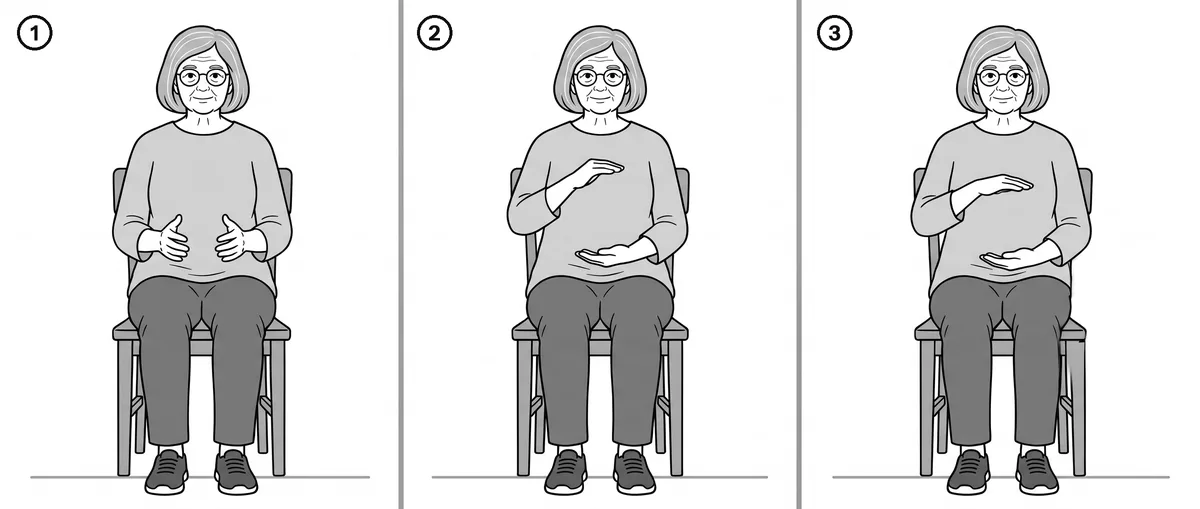
Then there is the chair. Pick one with four legs and no wheels. With your feet flat, your knees should sit roughly level with your hips. If your feet dangle, set a firm cushion or a thick book under them. A soft armchair is the common mistake: you sink, your back rounds, and the arms can't travel freely.
For a closer look at what seated tai chi is and isn't, read is chair tai chi legit?
What tai chi walking practices
Tai chi walking practices the step itself, slowed down until you can feel each part of it. The foot lands first and the weight follows. At any moment you could stop and simply stand.
A typical first exercise is the empty step. Stand side-on to a counter with one hand resting on it. Shift onto your left foot, then set the right heel a short way ahead with the toes up and almost no weight on it. Hold for a slow count of two, then bring the foot home. The usual mistake is leaning on the counter to reach. If that happens, shorten the step.
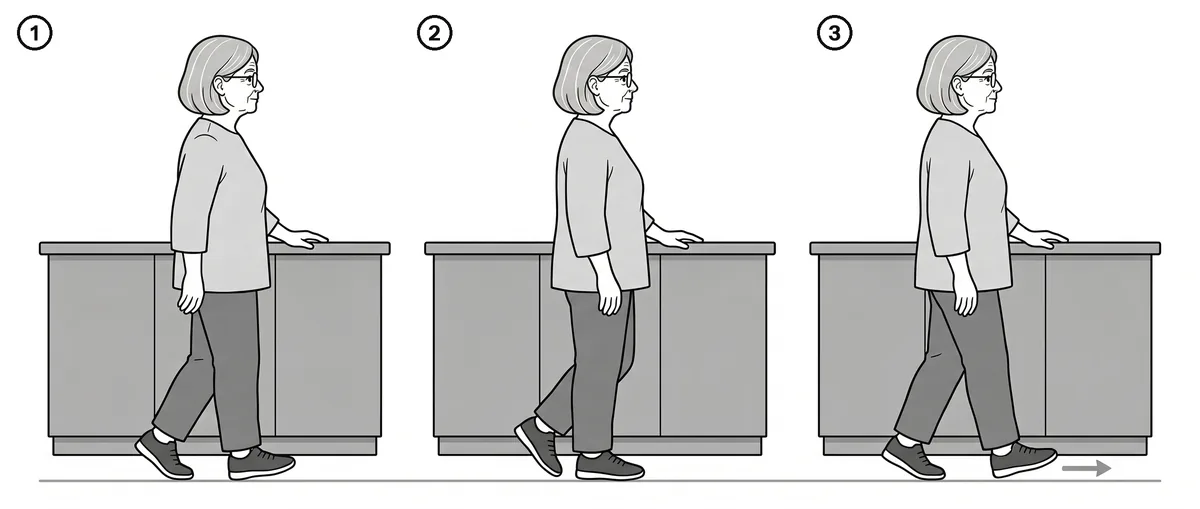
Our guide to the basic tai chi step for beginners goes through it in order, one part at a time.
Where the two overlap
Both move slowly, pair each motion with the breath and rely on a sturdy chair. Tai chi walking programs often spend their first week seated, with arm moves that would fit just as well in a chair tai chi session. A few classic shapes, such as Cloud Hands and Hold the Ball, show up in both.
The real difference is where the effort lands. Chair tai chi puts it in the shoulders, hands and trunk. Tai chi walking puts it in the feet, the ankles and that small moment when weight moves from one leg to the other.
Choose chair tai chi if…
- Standing for more than a few minutes tires you out.
- You use a wheelchair, or you simply feel safer sitting down.
- Your shoulders and upper back feel stiff and you'd like to move them gently.
- A short, flowing routine of about ten minutes sounds right.
- You'd like a calm start before you try anything on your feet.
Choose tai chi walking if…
- Standing at a counter for ten minutes or so feels fine to you.
- You feel less sure of yourself when you walk, turn or step off a rug.
- The motion of walking itself is what you'd like to practice, slowly and with support.
- There's a clear stretch of floor beside a counter or a wall in your home.
- Seated moves already feel easy and you want a next stage.
If you're torn between tai chi walking and a seated stretching class, the tai chi walking vs. chair yoga comparison sets those two side by side.
Can you do both?
Yes. A simple pattern is chair tai chi on most days, plus a few minutes of slow steps at the counter two or three times a week. On a tired or stiff day, stay in the chair. The counter steps can wait until tomorrow.
You can also start seated and add standing later. In Chair Tai Chi for Seniors, every move comes in three levels: Gentle, Steady and Stronger. Step up a level only once a move has felt easy for three days in a row. That same patient rule works well when you first try standing practice.
A safety note for both
Stop and sit down if you feel sharp pain, dizziness, chest discomfort or shortness of breath. On a smooth floor, push the chair back against a wall so it can't slide. For tai chi walking, keep a counter or a heavy chair within easy reach during every standing move.
Talk to your doctor before you begin if you have fallen in the past year, had recent surgery or a joint replacement, or take heart or blood pressure medicine.
Your next step
Pick the side of the table that matches your day. If it's the chair, sit on the front half of the seat and try ten slow breaths with your hands resting on your thighs. For a one-page routine with drawings to keep beside the chair, print the free starter routine.
Questions people ask
Is chair tai chi easier than tai chi walking?
For most people, yes. Chair tai chi keeps you seated the whole time, so there is no stepping and no standing balance involved. Tai chi walking asks you to stand and take slow steps with a hand on a counter. Easier does not mean lesser. Both are real tai chi practice.
Can I do chair tai chi and tai chi walking on the same day?
Yes. Some people do a few seated moves in the morning and a short, slow walk along the counter later in the day. Keep each session short, and stop if you feel tired or dizzy.
Do I have to move on to standing one day?
No. A seated practice can be your whole practice for as long as you like. Standing is an option, not a test you have to pass.
Keep reading
- Farmers Walk vs. Tai Chi Walking: Which Fits After 60?
- Tai Chi Walking vs. Chair Yoga: Which Suits You?
- Tai Chi Walking vs. Regular Walking: What's the Difference?
- Tai Chi Walking vs. Tai Chi: Which Should You Learn?
- Balance Test for Seniors at Home: A Gentle 5-Day Check
- About the book: Chair Tai Chi for Seniors