Is Chair Tai Chi Legit? 5 Myths and Plain Facts
Is chair tai chi legit? Yes. It's real tai chi, done sitting down, and it keeps the parts that matter most: slow arm moves, a gentle waist turn and an easy, low breath. It won't make you fit overnight, and nobody honest should claim it will. What it offers is a calm daily practice that many older adults can do safely in their own living room.
The myths below come up again and again. Each one has a short, plain answer. Check with your doctor before you start any new exercise, especially if you've had a fall, dizziness or recent surgery.
Is chair tai chi legit, or just a gimmick?
Chair tai chi is an honest adaptation of a very old practice. Tai chi began in China as a martial art and slowly became a soft, flowing way to move with the breath. Most of it is done standing. Over time, teachers found that the arms, the turn of the waist and the slow breathing transfer to a chair with little change.
So the word "legit" depends on what you expect. If you want a gentle routine that wakes up the shoulders, hands and trunk, it fits. Be wary of anyone who promises a new body by next month. The gimmick is in that promise, not in the practice.
For a wider look at what research on tai chi for older adults does and doesn't show, see does tai chi walking really work?
Myth 1: "Chair tai chi isn't real tai chi"
The moves are the same classic shapes, with the same old names. White Crane Spreads Its Wings, Part the Wild Horse's Mane, Brush Knee and Cloud Hands all appear in seated versions. What changes is the lower body. A standing form steps forward and back. In the chair, the weight moves instead from one sit bone to the other.
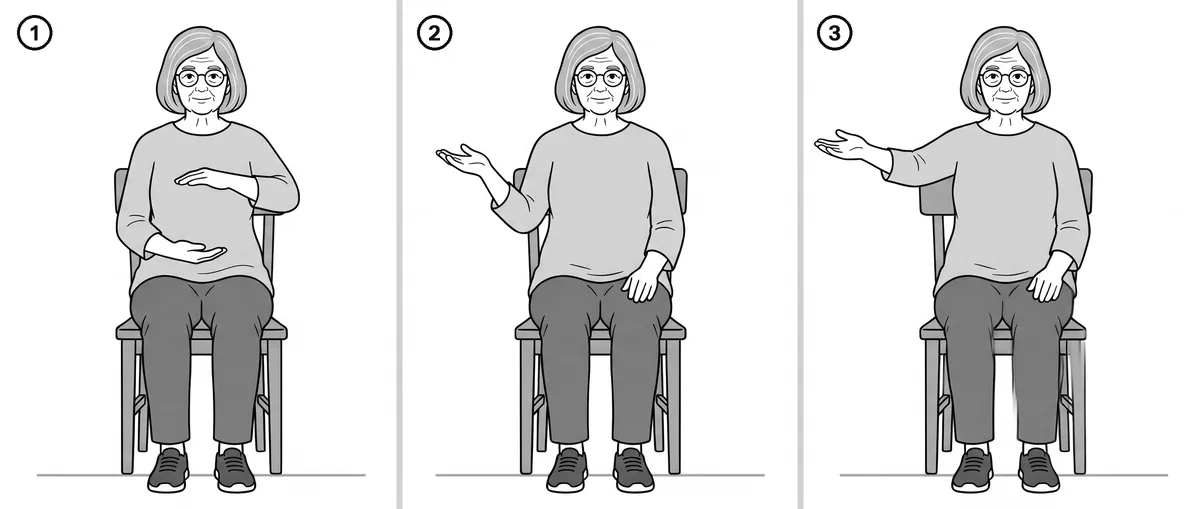
There is also no one "correct" form. Teachers in different countries shape these moves a little differently. What counts is moving slowly, breathing easily and staying comfortable.
What to do: Learn a few classic moves in a chair. Notice that the slow, joined-up feeling is the same one standing players chase.
Myth 2: "Sitting down means your legs do nothing"
The tai chi form itself mostly works the arms, the trunk and the breath. That part of the myth is fair. But a good seated program adds a few leg moves on purpose, because the form leaves the legs quiet.
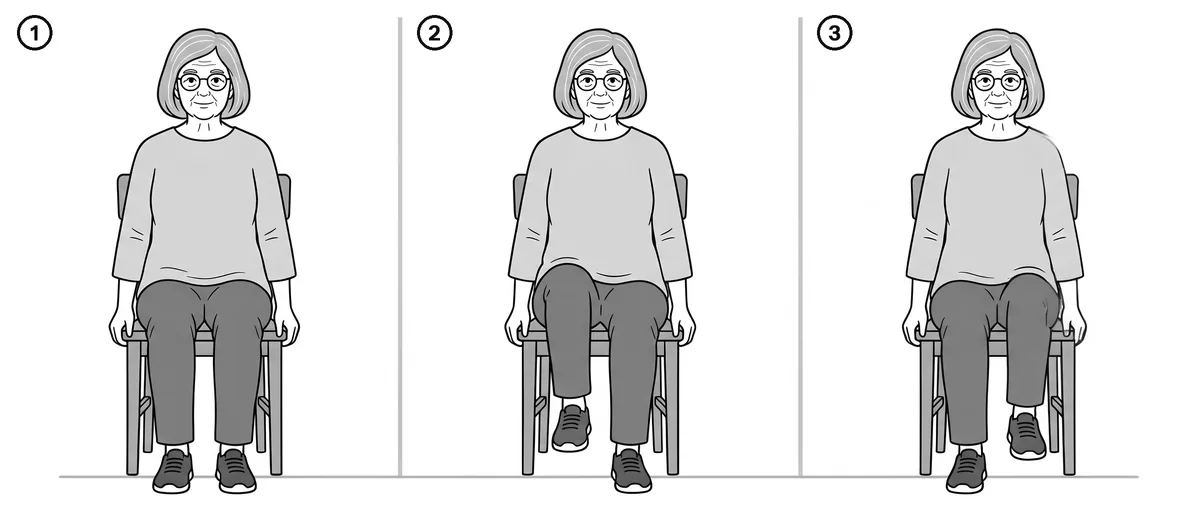
For example, the Seated Knee Lift is a chair version of a standing tai chi pose called Golden Rooster. You lift one knee until the foot just leaves the floor, then set it down softly. It works the front of the hip, the same muscles you use to climb a step. A slow heel-to-toe rock keeps the ankles and calves moving after long hours in a chair.
What to do: After your arm moves, add one or two leg moves. Hold the seat, keep your back tall and lift no more than a few inches.
Myth 3: "Slow means it does nothing"
Tai chi is slow on purpose. Slow movement gives you time to feel what your body is doing. Many people also find it kinder to stiff joints than quick repetitions.
A simple rule from the seated program sets the pace: the breath decides how fast the hands go. Breathe in through the nose for about three counts. Breathe out for about four. Run out of breath halfway through a move? Then the hands were too quick. Slow them down until the breath stays easy.
What to do: Choose one move. Do it once at your usual speed, then once at half that speed. Notice which one you can feel more clearly.
Myth 4: "You need an app, a video or an expensive class"
You don't. Classes and videos can help some people, and a local class is a friendly way to start. Still, the practice needs very little:
- a firm chair without wheels
- flat shoes or bare feet
- clothes you can move in
- about ten minutes a day
Before choosing a chair, read what chair tai chi is and how to set up your seat. Sit near the front edge, feet flat and about hip-width apart. If the seat is too low, your knees rise above your hips and sitting tall gets harder.
What to do: Clear a space in front of a firm kitchen chair. Keep a glass of water within reach. That is your whole setup.
Myth 5: "It's only worth it if you can do the whole routine"
Small sessions count. A seated program often starts with just a few foundation moves: sitting tall, belly breathing and soft "tai chi hands." The classic moves come after that, a few each week over four weeks.
Every move can also be scaled. At the easiest level, your forearms can rest on your thighs while only the hands lift and turn. A useful habit is to stay at one level until it has felt simple on three days running, and only then move up. On a low-energy day, a short version with only the first few moves is still practice.
What to do: If ten minutes feels like too much today, do three moves and three slow breaths. Stop while it still feels pleasant.
Chair tai chi or chair yoga?
Both are gentle and both happen in a chair. Chair yoga usually holds stretches and poses. Chair tai chi keeps moving, one shape flowing into the next, timed to the breath. Plenty of people do both on different days. Our tai chi walking vs. chair yoga comparison sets them side by side.
A safe way to try it this week
Sharp pain, dizziness, a tight chest or hard breathing are signs to stop and rest. If you use a wheelchair, lock the brakes first.
- Sit tall near the front edge of a firm chair, feet flat.
- Lift your shoulders on an in-breath and let them drop on the out-breath. Do it five times.
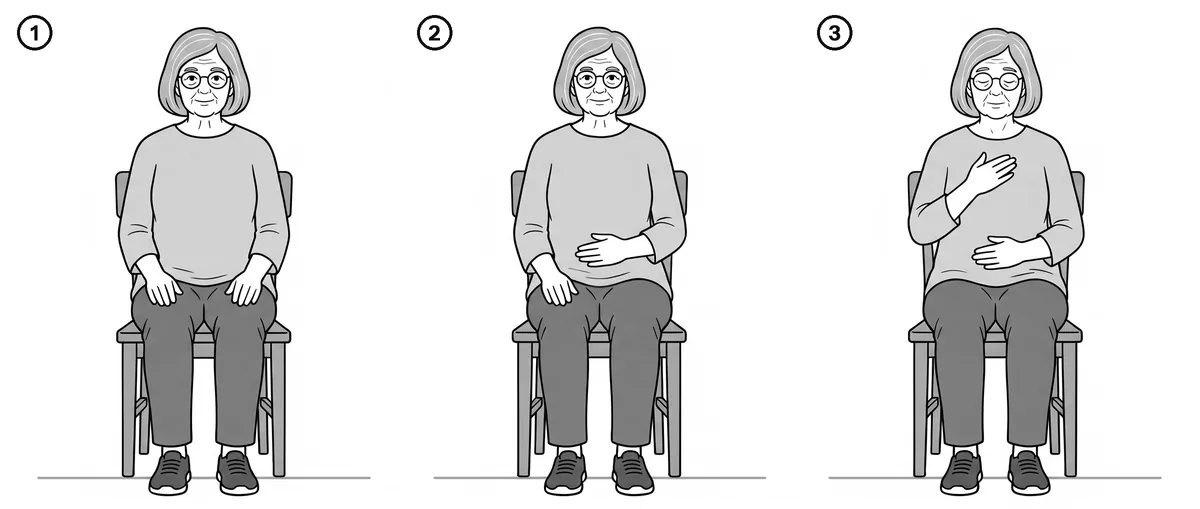
- Rest one hand on your belly and one on your chest. Take five slow breaths, letting the belly hand rise more.
- Float both arms up to shoulder height and down again, slowly, six times.
- Sit quietly for three breaths.
That takes about five minutes. The free printable starter routine gives you a few more beginner moves with drawings. If you want the full seated program, with twelve classic moves joined into a five-minute short form, see Chair Tai Chi for Seniors.
Your next step: Pick a time tomorrow, such as right after breakfast, and do the five steps above once.
Questions people ask
Is chair tai chi a real thing?
Yes. Tai chi has been taught in chairs for a long time, mostly to older people who get tired on their feet. The classic arm moves, the waist turn and the slow breath all work in a chair. Only the stepping is left out.
Do I need an app or a paid class for chair tai chi?
No. You need a sturdy chair without wheels, flat shoes or bare feet, and about ten minutes a day. A book with clear drawings or a local class can guide you, but nothing about the practice requires a subscription.
Can I do chair tai chi in a wheelchair?
Many people do. Lock the brakes first. The arm moves and the slow breath work the same way. If your feet can't move freely, skip the leg moves and keep the rest.
How long before chair tai chi feels easier?
Many beginners notice that the moves feel smoother after the first week or two of daily practice. Try a harder level only after the current one has felt simple on three days running.
Keep reading
- Seated Balance Exercises for Seniors: 8 Plain Answers
- Tai Chi Stance for Beginners: How to Stand, Step by Step
- Starting Tai Chi Walking After 70: A Safe First Week
- Tai Chi Books for Seniors: 7 Questions to Ask First
- Seated Tai Chi for Seniors: 6 Gentle Chair Moves to Start
- About the book: Chair Tai Chi for Seniors