Tai Chi Stance for Beginners: How to Stand, Step by Step
A tai chi stance for beginners is a tall, relaxed way of standing: feet hip-width apart, spine long, knees slightly soft and weight spread evenly through both feet. You can learn it in a few minutes behind a sturdy chair. It's the starting point for every standing tai chi move and for the slow tai chi step.
What is a tai chi stance?
A tai chi stance is simply standing on purpose. Most of us stand with locked knees and our weight stuck on the heels or the toes, and we never notice it. Tai chi asks you to stand so that your weight sits over the middle of your feet and your legs can give a little.
That small change matters. Locked knees make the body stiff and easy to tip, so a tiny wobble travels straight up. Slightly bent knees work more like springs and soak up those small wobbles.
Before you stand: set up a safe spot
Set up the chair first, before you try a single step. Use a sturdy chair with no wheels. Turn it so the backrest faces you, and push the front of the chair against a wall or a counter so it can't slide away.
Stand close enough that both hands rest on top of the backrest with your elbows a little bent. Wear flat shoes that grip, not socks.
Check with your doctor before you start any new exercise, especially if you've had a fall in the past year or recent surgery. Sit down at once if you feel dizzy, short of breath or any sharp pain. On a day when standing feels like too much, every step below can be done seated.
How to find your tai chi stance, step by step
There are six steps. The first is done sitting, and the rest happen behind the chair. Each one has a cue to feel and one thing to avoid.
Step 1: Take five belly breaths, seated
Sit near the front of the chair with both feet flat. Put one hand just below your ribs. Breathe in through your nose for a slow count of three or four, and let your belly rise. Breathe out for a count of four to six.
- Feel: your belly lifting your hand on the in-breath, then sinking back.
- Avoid: filling your lungs as far as they'll go. A gentle breath is enough.
Step 2: Stand behind the chair, feet hip-width apart
Rise and step behind the chair. Place both hands on the backrest. Set your feet about hip-width apart, toes pointing forward.
- Feel: both hands resting lightly, like they're on a table.
- Avoid: gripping the chair hard. White knuckles mean tight shoulders.
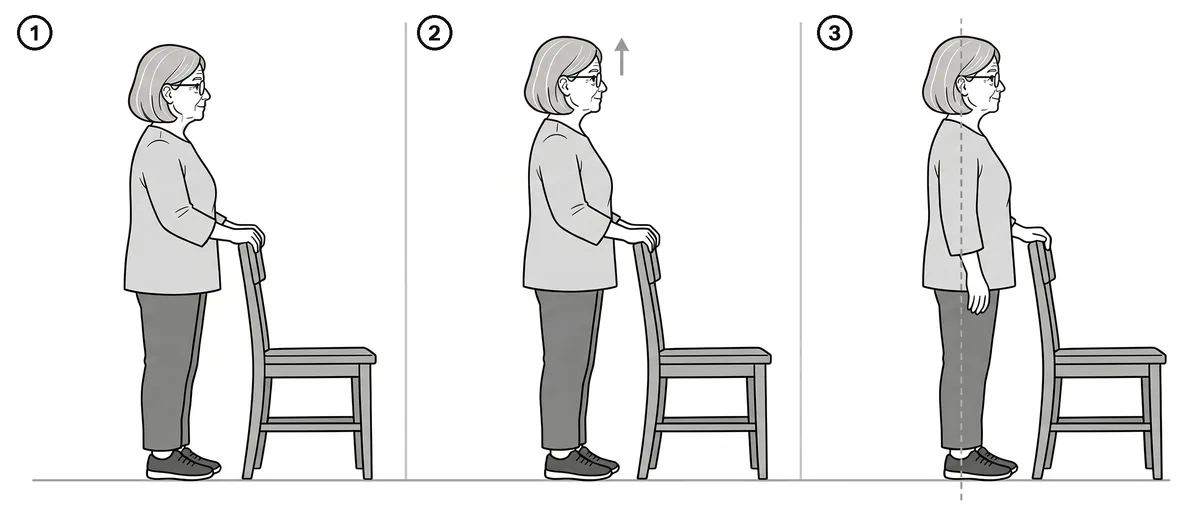
Step 3: Grow tall through the spine
Picture a thread drawing the top of your head gently toward the ceiling. The back of your neck lengthens. Your tailbone points softly down toward the floor. Stay here for five slow breaths, rest, and repeat three times.
- Feel: a little more space between your ears and your shoulders.
- Avoid: puffing your chest forward. Tall is easy, not stiff.
Step 4: Soften the knees
Unlock both knees by a tiny amount. Imagine you're about to perch on a tall bar stool, then stop before you go down. Breathe out as the knees soften. Hold for three breaths, then straighten slowly without snapping back. Do this five times.
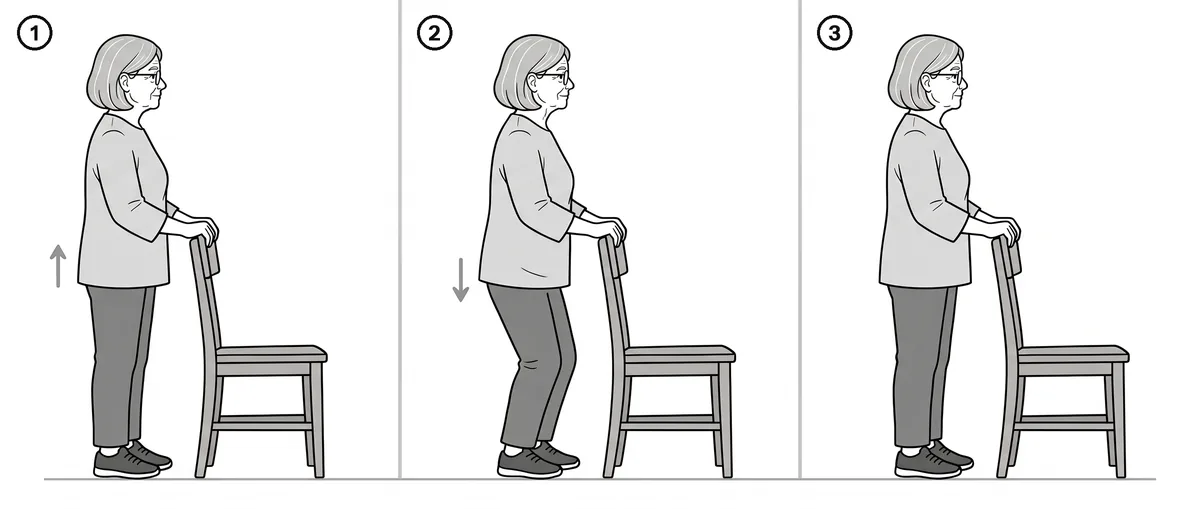
- Feel: your weight sinking down into your feet while your back stays upright.
- Avoid: turning it into a squat. Keep the knees over the feet, not drifting inward.
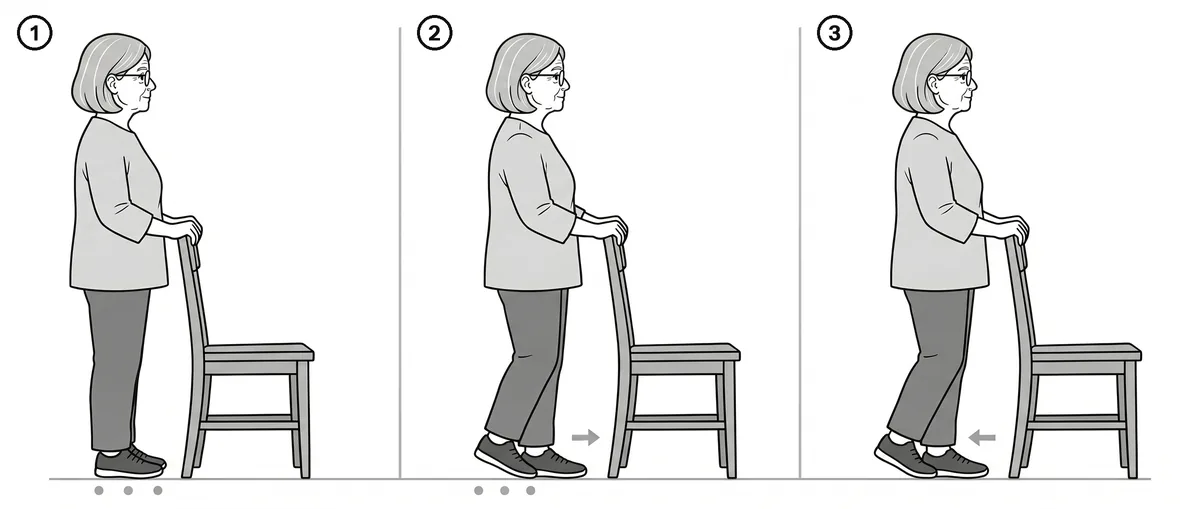
Step 5: Find the three points of each foot
Each foot rests on three main spots. One is the heel. The other two are the pads below the big toe and the little toe. Rock forward toward the toes, very slightly, then back toward the heels. Make each rock smaller until you settle in the middle. Five small rocks is plenty.
- Feel: all three points pressing evenly into the floor.
- Avoid: lifting the heels or toes. The feet stay flat the whole time.
Step 6: Rest in the full stance and breathe
Now put it all together. Feet hip-width, spine long, knees soft, weight centered. Stay for three slow belly breaths. Then walk around the chair and sit down.
- Feel: quiet. Nothing is held tight, and nothing is collapsing.
- Avoid: holding your breath while you concentrate. If you lose count, start again at one.
How long should you practice the tai chi stance?
Three or four minutes a day is enough to begin. That covers all six steps with short rests. In Tai Chi Walking for Seniors, every day of the plan opens with five belly breaths. The other three skills are added on stiff days, or when you have a few spare minutes.
Don't rush to add time. If five breaths in the tall spine feel easy after a week, try ten. That one change is enough.
How to check your stance during the day
Between sessions, check your stance in ordinary moments. Many people stand with locked knees out of habit, and a habit like that shifts through small, frequent reminders.
Try it while the kettle boils, or while you wait at the kitchen sink. Rest one hand on the counter. Ask yourself two things: are my knees locked, and where is my weight? Soften the knees a little and find the middle of your feet. It takes ten seconds.
You may notice that one foot feels heavier, or that you lean toward your heels. Just notice it. There's nothing to fix right away.
When can you take the stance into walking?
Once the stance feels familiar, it becomes the base for moving. The slow tai chi step starts from exactly this position: tall, soft-kneed and centered. Then the weight shifts to one foot so the other can step. Our guide to the basic tai chi walking step shows that next stage.
If you're new to all of this, what tai chi walking is gives the bigger picture. Starting later in life? See a safe first week after 70.
The stance is the first small piece of a 28-day plan that moves from the chair to standing, then to walking, then to the arms. Tai Chi Walking for Seniors has the full day-by-day program with drawings. For a page to keep on the fridge, get the free printable.
Your next step: tomorrow, while the kettle heats, rest a hand on the counter and soften your knees for three slow breaths.
Questions people ask
How wide should my feet be in a tai chi stance?
For beginners, about hip-width apart, with the toes pointing forward. That usually means one fist's width between the feet. Wider stances come later, once standing feels easy.
Can I practice the tai chi stance sitting down?
Yes. Sit tall near the front of a sturdy chair with both feet flat. Lengthen your neck, let your legs relax and feel your feet on the floor. You keep most of the benefit of the posture.
Should I hold the chair the whole time?
Yes, at the start. Rest both hands on the chair back for every step in this guide. The plan tells you later when one hand is enough, so there's no rush to let go.
Why do my legs feel tired after just standing?
Soft knees ask the thigh muscles to do a little more work than locked knees do. Mild tiredness is common in the first week. Sit down between rounds and keep the bend small.
Keep reading
- Is Chair Tai Chi Legit? 5 Myths and Plain Facts
- Seated Balance Exercises for Seniors: 8 Plain Answers
- Starting Tai Chi Walking After 70: A Safe First Week
- Tai Chi Books for Seniors: 7 Questions to Ask First
- Seated Tai Chi for Seniors: 6 Gentle Chair Moves to Start
- About the book: Tai Chi Walking for Seniors