Seated Balance Exercises for Seniors: 8 Plain Answers
Seated balance exercises for seniors are small, slow moves you do in a sturdy chair: shifting your weight between your two sit bones, turning the chest while the knees stay still, and sitting tall without the backrest. They ask the hips and trunk to keep you upright while the chair holds you. Many people find them a calm first step before any standing balance work.
Below are eight questions people often ask, each with a short answer. Check with your doctor before you start a new exercise routine, especially if you get dizzy or have had a fall.
What are seated balance exercises for seniors?
They are moves that ask your body to stay steady while something shifts, done with your seat on a chair. On your feet, balance means keeping your weight over your feet. In a chair, that job falls to the muscles around your hips and the middle of your body. Each time you lean a little and come back, those muscles do the work.
Seated tai chi builds this into its first lessons. In Chair Tai Chi for Seniors, the opening days teach how to sit, how to breathe low, how to move the weight across the seat and how to turn from the waist. Every later move rests on those skills.
Before you start, use a sturdy chair with four legs and no wheels. Keep both feet flat on the floor. Pause and rest if anything hurts sharply, if you get dizzy, or if your chest feels tight or your breathing gets hard.
Can you really work on balance sitting down?
Yes, for the trunk and hips, and many people like the extra safety of a seat. A chair can't do everything. It won't train your feet to steady you on a moving bus or a sloping sidewalk. But staying upright starts in the middle of the body, and that part works well seated.
Lean an inch to the right and feel more weight on that side. Then bring yourself back to center without using your hands. That small return is the balance skill, and you feel it most clearly when you go slowly. For a wider look at what tai chi can and can't do for steadiness, read does tai chi improve balance?
What is the best seated balance exercise to start with?
Start with the Seated Weight Shift. Standing tai chi moves the weight from foot to foot. Seated, it travels from one sit bone to the other side. The sit bones are the two firm points you feel under your bottom on a hard seat.
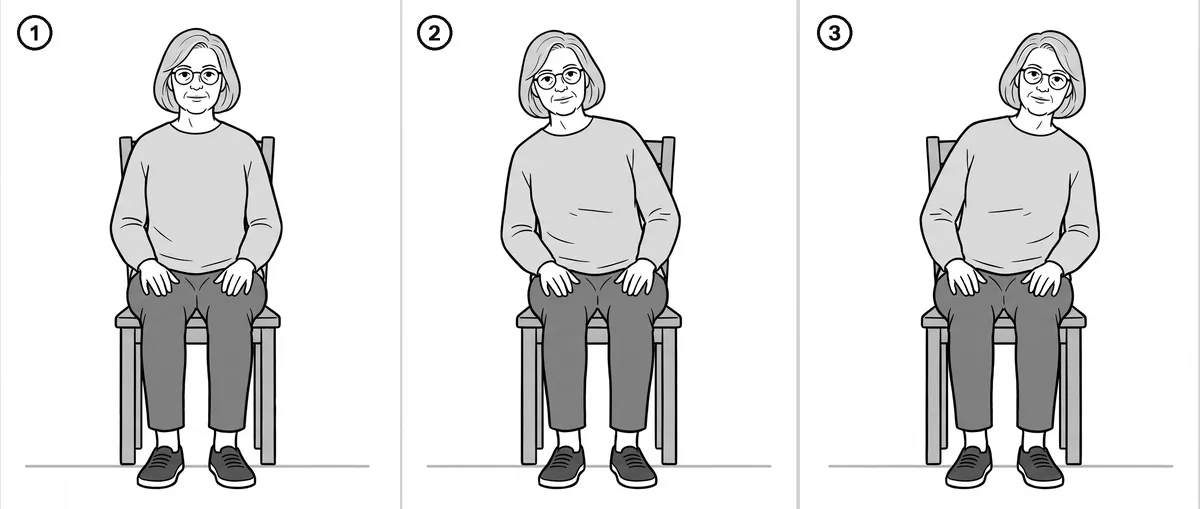
- Sit tall, hands resting on your thighs.
- Notice both sit bones pressing into the seat.
- Breathe out and lean slightly right, so that side takes more weight.
- On the in-breath, return to the middle.
- Repeat the lean to the left.
Begin with three small leans each way, about an inch. The common mistake is bending sideways at the waist, like a teapot pouring. Keep your back in one long line and let the lean come from the hips. Both feet stay on the floor the whole time.
How do I make seated balance exercises harder without standing?
Make them harder in small stages, and only after the current version has felt easy for three days in a row. The book uses that rule for every move.
Three ways to add a little challenge:
- Pause at each side. Hold the lean for one slow breath before you come back.
- Add two directions. Lean a little forward and a little back, as well as side to side. One round covers all four.
- Leave the backrest. Sit toward the front of the seat with your back free, and stay tall for five slow breaths. Your trunk now holds you up with no help. Rest your hands on the sides of the seat if you feel unsteady.
Speed is the wrong tool here. Slower is harder in a useful way, because you have to control every inch. If a lean starts to feel wobbly, go back to the smaller version for a few more days.
Does turning the waist help with balance?
It can, because turning while you stay steady is something you do every day. Think of looking over your shoulder before you cross a room, or reaching for a cup on the counter beside you. The seated Waist Turn practices that in a safe position.
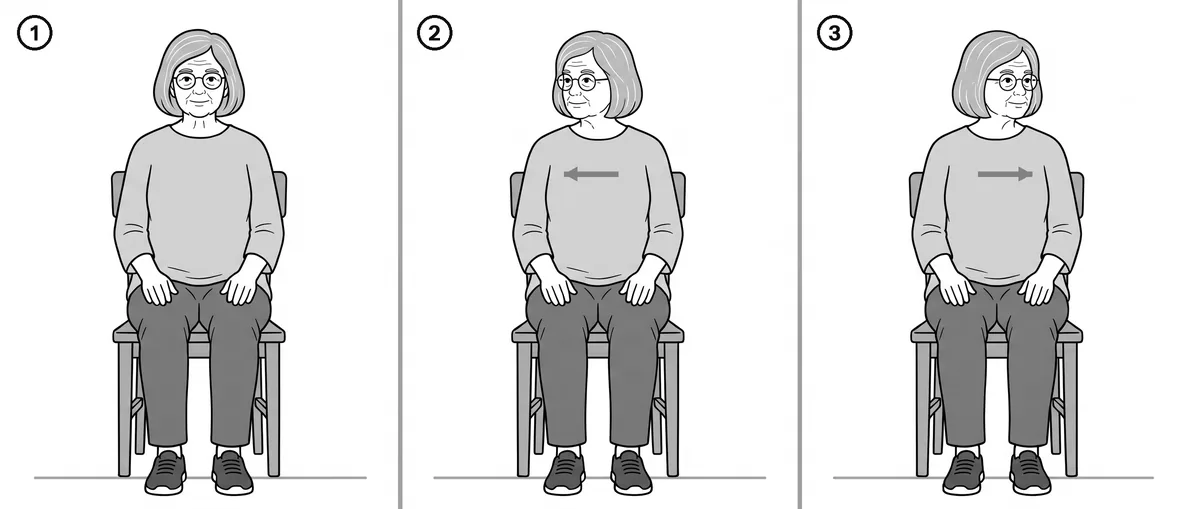
Sit tall with your knees pointing forward. Breathe out and turn your chest and head slowly to the right. Come back on the in-breath, then turn to the left. At first, turn only your head and shoulders, three times each way.
The cue to feel is still knees. If they swing with you, the turn has slipped into your legs. Turn only as far as is easy, and stop if your head starts to spin or your back pinches.
Can I do seated balance exercises in a wheelchair?
Many people can. Lock both brakes first. If the footrests are in the way, swing them aside so your feet can reach the floor. The weight shift and the waist turn work the same way in a wheelchair, as long as you can feel the seat under you.
If your feet can't move freely, leave out any foot moves and keep the trunk work. The leans may be smaller in a soft sling seat. That's fine. A small lean you can feel beats a big one you can't. For the basic chair setup and a five-minute first session, see is chair tai chi legit?
How often should seniors do seated balance exercises?
A short session most days works well for many people. In the seated program, the first three days build up to all five foundation moves, and that whole session takes about eight minutes. You don't need more than that to begin.
Try this order. Settle in with a few shoulder shrugs, then take five slow belly breaths. Add the weight shift and the waist turn. Finish by sitting quietly for three breaths. Tie it to something you already do each day, like the first cup of coffee.
Keep your eyes open while you move, with a soft gaze at the wall ahead. Save closing them for the still breaths at the end.
When can I move on to standing balance exercises?
Once the seated moves feel easy and calm, you can think about standing, but there's no deadline. Standing is optional. The safest first standing move stays at the chair. Push a heavy chair against a wall and stand behind it. Rest both hands on the top of the backrest, then shift your weight gently from foot to foot.
Ask your doctor first if getting up from a chair is hard for you, if you've fallen in the past year, or if you often feel dizzy on your feet. Have someone in the room the first few times. When you're ready for more, balance exercises for seniors at home shows standing moves with a counter or chair for support.
Where to go from here
The free printable starter routine has a few beginner moves with drawings you can keep beside your chair. For the full 28-day seated program, with 24 chair moves and a 12-move short form, see Chair Tai Chi for Seniors.
Your next step: tomorrow, sit in a kitchen chair and do three small weight shifts to each side.
Questions people ask
Do I need any equipment for seated balance exercises?
Only a sturdy chair with four legs and no wheels, on a floor where it won't slide. Flat shoes or bare feet let your soles feel the floor. Keep a glass of water within reach.
Should I keep my eyes open during seated balance work?
Yes, while you move. Look softly at a spot on the wall at about eye height. Close your eyes only when you sit still for a few slow breaths at the end.
What should I feel during a seated weight shift?
Mostly a gentle pressure moving from one side of the seat to the other, with quiet work around the hips and the middle of your body. It should feel easy. If it feels like a strain, make the lean smaller.
Keep reading
- Is Chair Tai Chi Legit? 5 Myths and Plain Facts
- Tai Chi Stance for Beginners: How to Stand, Step by Step
- Starting Tai Chi Walking After 70: A Safe First Week
- Tai Chi Books for Seniors: 7 Questions to Ask First
- Seated Tai Chi for Seniors: 6 Gentle Chair Moves to Start
- About the book: Chair Tai Chi for Seniors